> For the complete documentation index, see [llms.txt](https://help.clickatell.com/llms.txt). Markdown versions of documentation pages are available by appending `.md` to page URLs; this page is available as [Markdown](https://help.clickatell.com/data/dashboards/chat-flow.md).
# Chat Flow
You get access to the following Chat Flow reports in the Clickatell Portal:
* [Full Analytics](#full-analytics)
{% hint style="info" %}
These reports can be **downloaded** as PDFs. If any filters were applied, only the filtered results are exported.
Where applicable, view **Definitions** for terms used in the reports via the button in the top right.
{% endhint %}
## **Full Analytics**
This report provides a full view of the user's Chat Flow data over different periods.
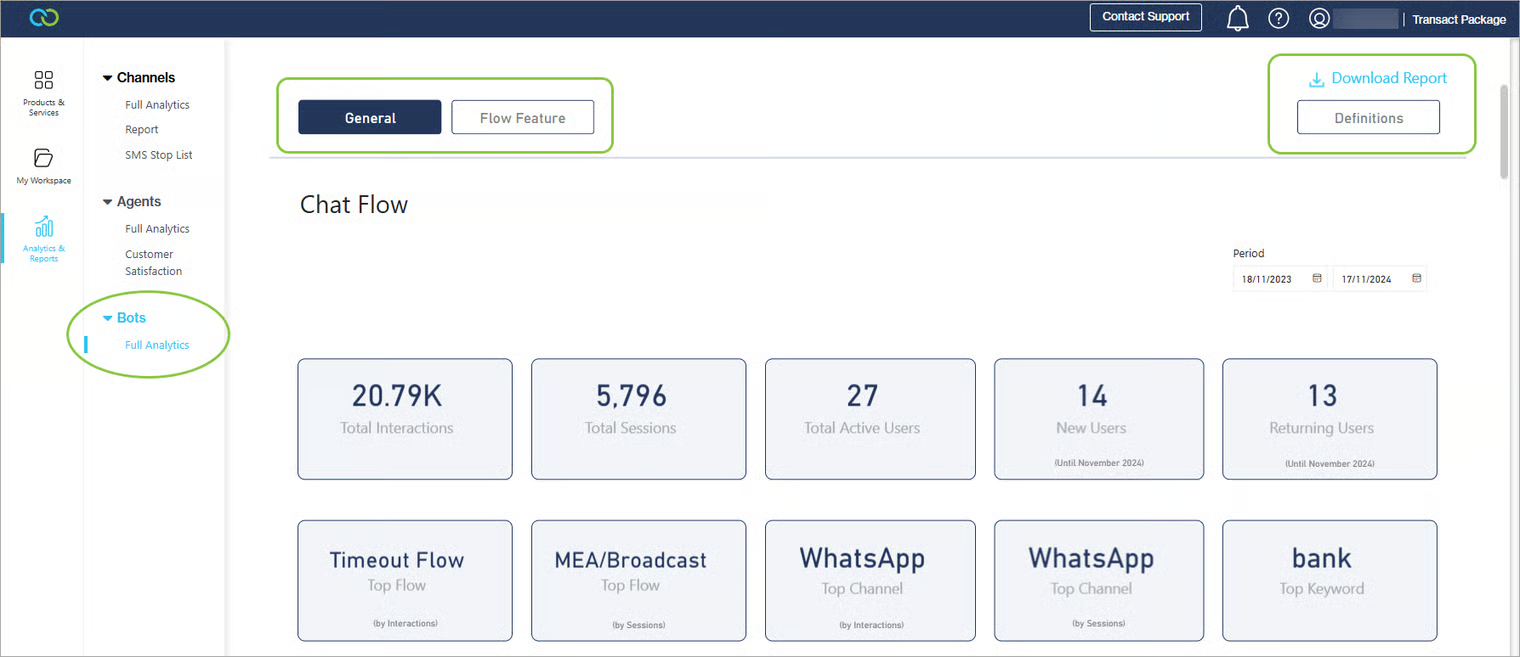
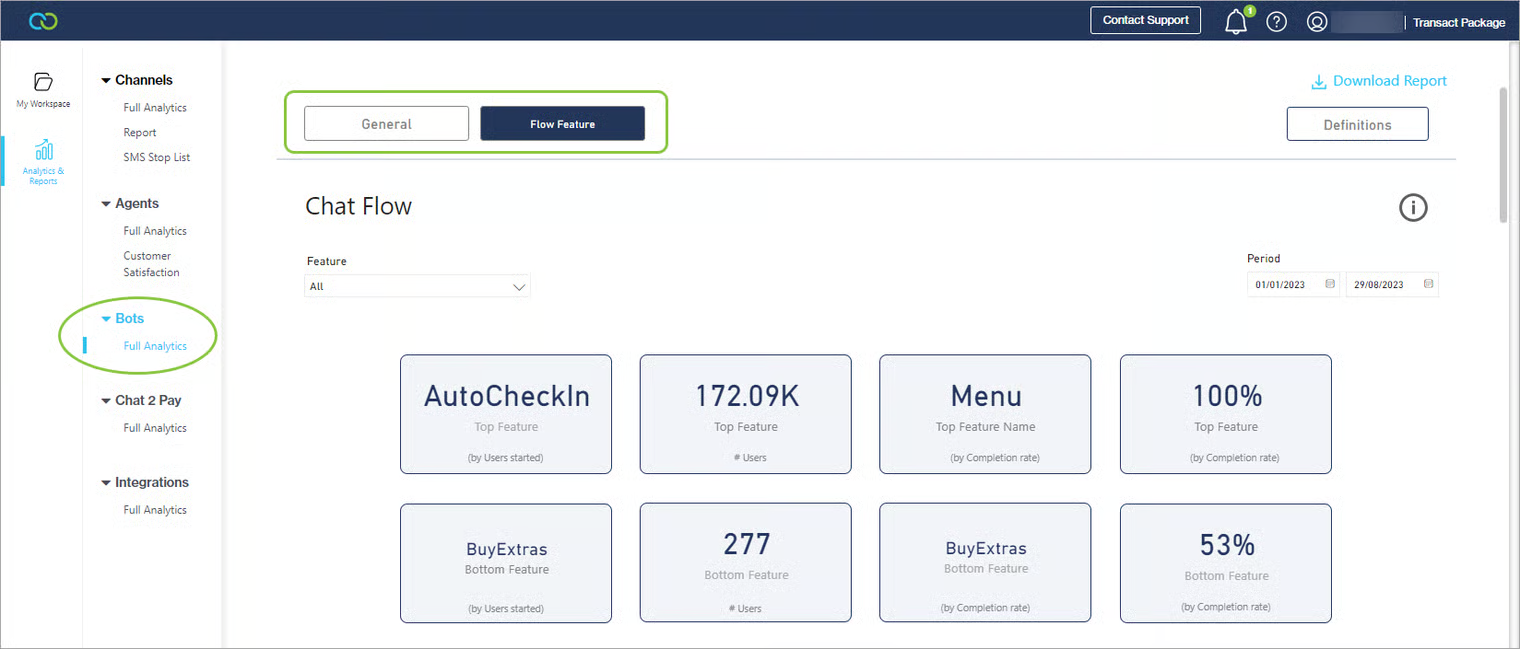
* Use the buttons at the top to switch between the [General ](#general-report)and [Flow Feature](#flow-feature-report) views.
### General Report
At the top of the report, various **metrics** summarize how Chat Flow is performing.
Metrics include:
* Total interactions and total sessions
* Total number of active, new, and returning users
* Top flow by interactions and by sessions
* Top channel by interactions and by sessions
* Top keyword used
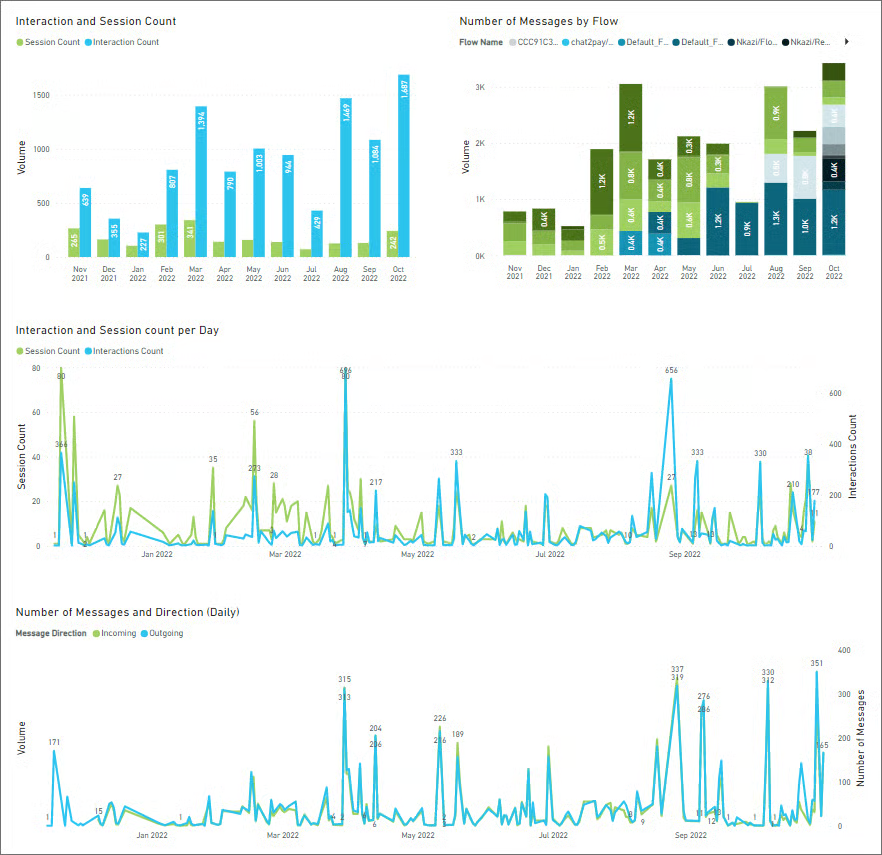
Scrolling down, you'll find **graphical** representations of your data.
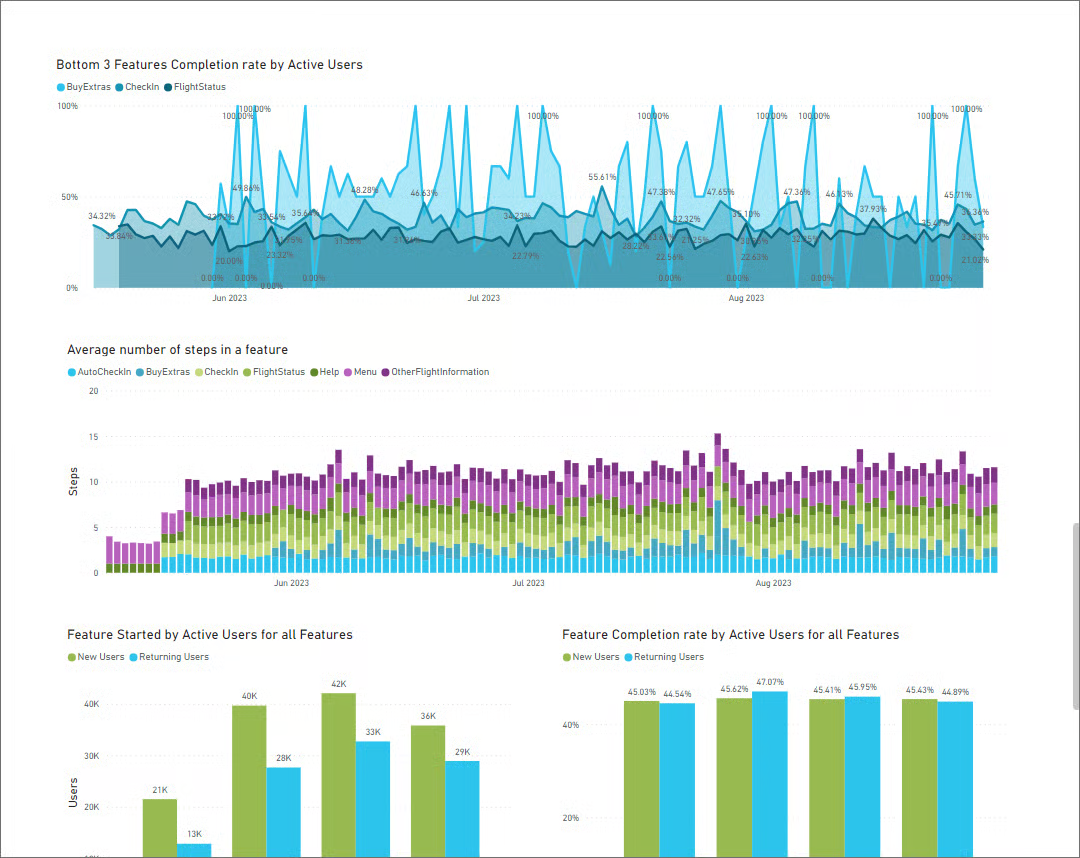
### Flow Feature Report
The Flow Feature report provides an in-depth view of the **flow features** you've set up in Chat Flow (Clickatell will help you set these up using your [data collections](https://guides.clickatell.com/flow/reporting-and-analytics/collections-and-reporting-labels)).
Flow features let you map customer journeys from initial contact to final outcome or transaction. For example, a series of steps in a flow for checking in to a flight can be grouped as a "CheckInStart" feature and tracked for drop-offs, successes, failures, or the number of users that visited that step.
This type of journey mapping offers deep insight into your customers' behavior and how they move through your workflows, which flows are used most, and where the drop-off rates are the largest.
At the top of the report, various **metrics** summarize your flow features.
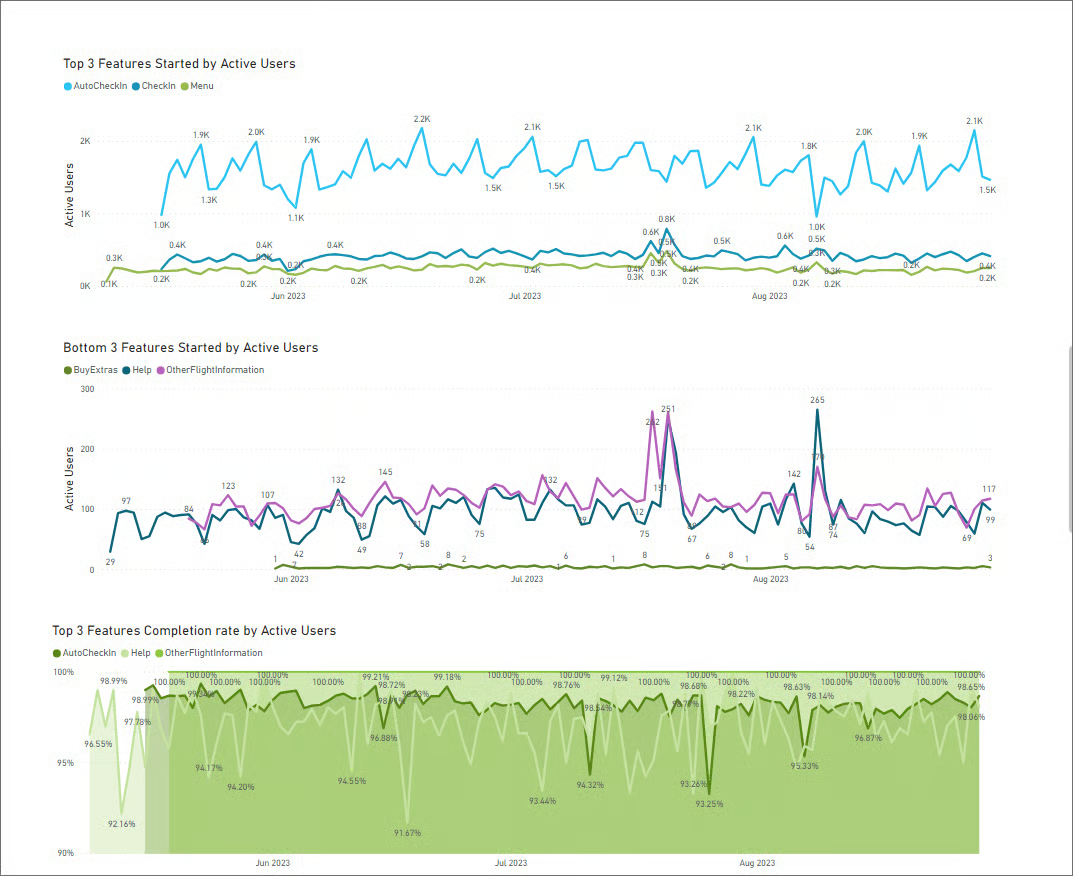
Scrolling down, you'll find **graphical representations** of your data.
---
# Agent Instructions
This documentation is published with GitBook. GitBook is the documentation platform designed so that both humans and AI agents can read, navigate, and reason over technical content effectively. Learn more at gitbook.com.
## Querying This Documentation
If you need additional information that is not directly available in this page, you can query the documentation dynamically by asking a question.
Perform an HTTP GET request on the current page URL with the `ask` query parameter, and the optional `goal` query parameter:
```
GET https://help.clickatell.com/data/dashboards/chat-flow.md?ask=&goal=
```
`ask` is the immediate question: it should be specific, self-contained, and written in natural language.
`goal` is optional and describes the broader end goal you are ultimately trying to accomplish on behalf of the user. GitBook uses it to tailor the answer towards what is most useful for that goal.
The response will contain a direct answer to the question and relevant excerpts and sources from the documentation.
Use this mechanism when the answer is not explicitly present in the current page, you need clarification or additional context, or you want to retrieve related documentation sections.